
How Babies Respond to Light and Sound: What Parents Need to Know
Your baby begins to experience the world long before birth, with sensory development starting in the womb. By the second trimester, your little one is already responding to light and sound, developing crucial sensory abilities that will continue to evolve after birth.
Key Highlights
Here’s what you should know about your baby’s sensory development:
- Babies can detect sounds as early as 18 weeks and recognize their mother’s voice by 25 weeks
- Fetuses can perceive light through the maternal abdomen and even show preferences for face-like patterns
- Newborns see best at a distance of 8-12 inches—exactly the distance to your face when holding them
- Sensory limitations at birth actually benefit long-term development
- Simple, everyday interactions can support healthy sensory development
Understanding Your Baby’s Prenatal Senses
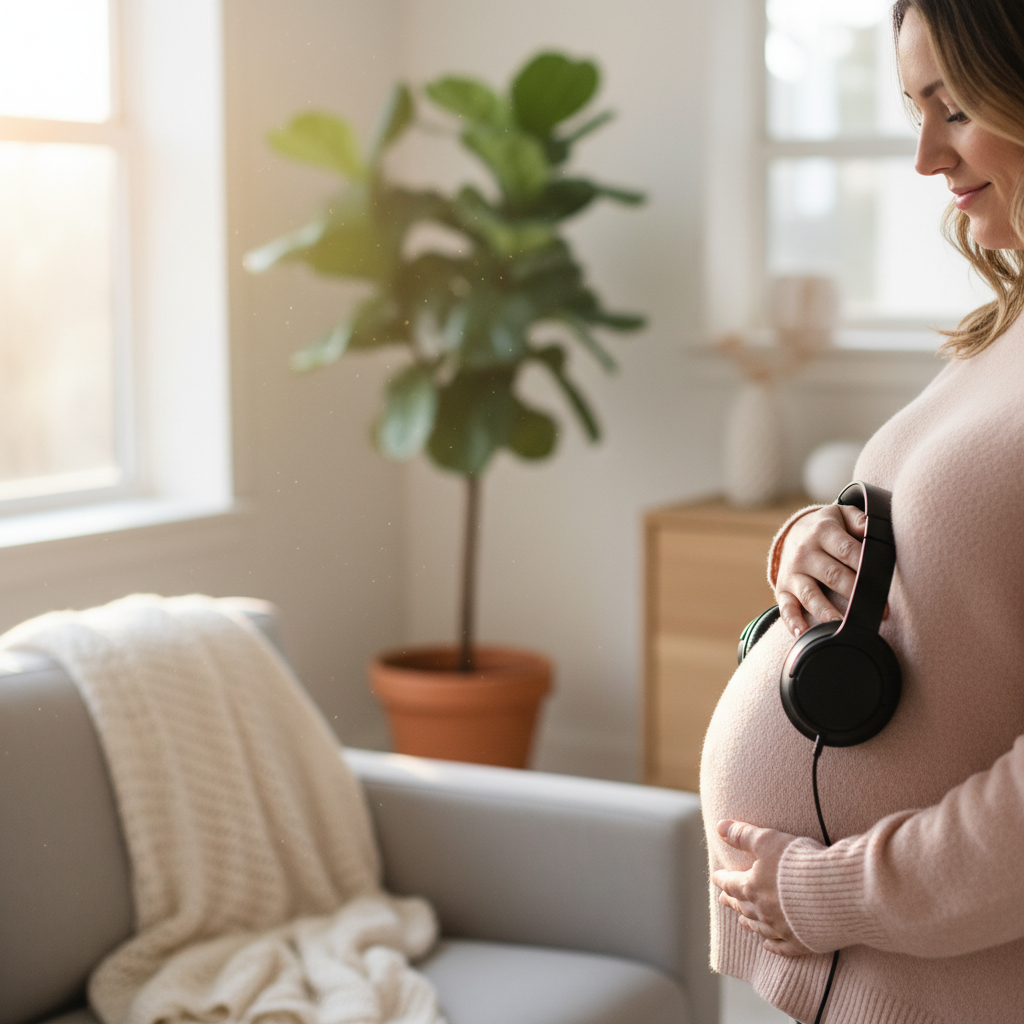
Your baby’s sensory journey begins earlier than you might expect, with significant development occurring during the 2nd trimester. By 18 weeks, your baby’s ears have formed enough for them to start detecting sounds, though these are initially muffled by amniotic fluid and your body tissues. As pregnancy progresses, your baby becomes increasingly responsive to the symphony of sounds in their environment—your heartbeat, digestive sounds, and most importantly, your voice.
Research shows that babies can detect light through the maternal abdomen, with studies indicating that fetuses may even respond to bright light shined on the mother’s belly after 22 weeks. Perhaps most fascinatingly, research has found that fetuses appear to show preferences for face-like patterns even before birth, suggesting an innate recognition system that helps them connect with caregivers immediately after birth. This early sensory development creates the foundation for the rapid sensory learning that will occur once your baby enters the world.
The Development of Visual Perception
During the 2nd month pregnancy period, your baby’s eyes begin forming, though full visual development continues well into the third trimester. By birth, your baby will have basic vision capabilities, but their visual acuity is limited to approximately 20/200 to 20/400—meaning they see at 20 feet what adults with perfect vision can see at 200-400 feet away. This limited clarity is actually perfectly suited for their needs at this stage.
Newborns see best at a distance of 8-12 inches—exactly the distance to your face when you hold them in your arms. Their color perception is also limited, with a preference for high-contrast patterns in black, white, and gray, rather than subtle colors. This explains why babies are naturally drawn to human faces, which provide the perfect high-contrast pattern at the ideal distance. Your baby’s visual limitations aren’t developmental shortcomings but rather specialized adaptations that help them focus on what matters most in their new environment: the faces of their caregivers.
Your Baby’s Auditory World

By the middle of your second trimester, your baby’s auditory system has developed enough to respond to sounds, with research showing that babies recognize and prefer their mother’s voice by about 25 weeks. This familiarity is why newborns are often calmed by hearing the same voices they experienced in the womb. Studies have shown that babies can even remember specific sounds, melodies, and language patterns they were exposed to before birth.
After birth, your baby’s hearing is actually quite sophisticated, though they process sounds differently than adults. They’re particularly attuned to the human voice, especially higher-pitched tones—which explains why we naturally tend to speak to babies in a higher register. When you talk or sing to your baby, you’re not just communicating; you’re providing crucial auditory stimulation that helps form neural connections necessary for language development and emotional bonding. This early auditory processing lays the groundwork for future communication skills and social development.
Why Sensory Limitations Benefit Development
Though it might seem that being born with fully developed senses would be advantageous, research shows that the gradual development of sensory abilities actually benefits long-term neurological development. If babies were born with adult-like vision and hearing, they would likely be overwhelmed by sensory input, making it difficult to focus on the most important developmental stimuli—like their parents’ faces and voices.
The limited sensory capabilities at birth allow babies to gradually adapt to their environment while focusing on what’s most important for their early development. These limitations provide a natural filter that helps babies prioritize certain types of sensory information over others. For example, their visual preference for high-contrast patterns and faces helps them focus on social interaction rather than being distracted by less meaningful visual stimuli. Similarly, their auditory preference for the human voice, particularly their mother’s, directs their attention to language acquisition and social bonding rather than being overwhelmed by background noise.
Supporting Your Baby’s Sensory Development
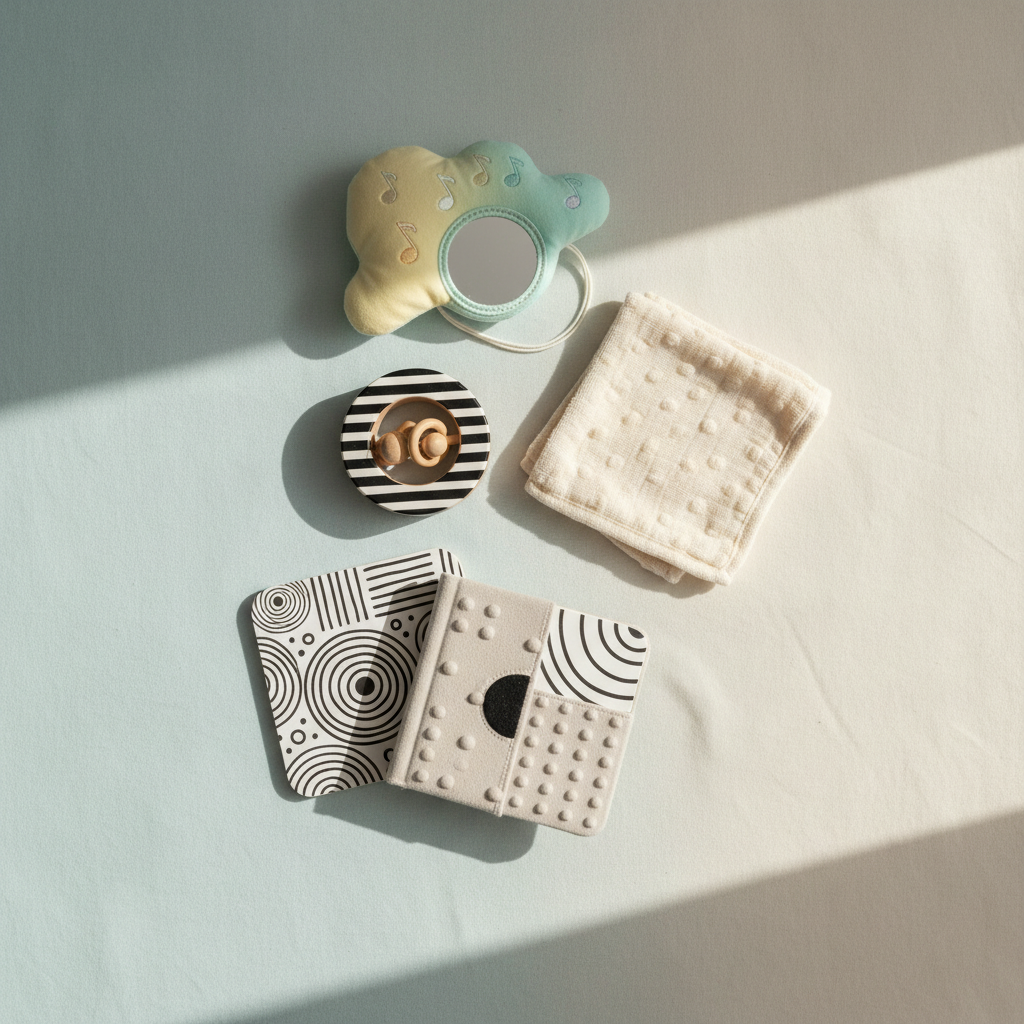
You can begin supporting your baby’s sensory development even during pregnancy by talking, singing, and reading aloud to your baby. These interactions not only help develop their auditory processing but also begin the bonding process. After birth, continue these activities while adding simple visual stimulation through high-contrast black and white patterns, which are perfect for newborn visual capabilities.
When interacting with your baby, remember that ordinary everyday moments provide rich sensory experiences. Holding your baby face-to-face at about 8-12 inches away gives them the perfect view of your face. Varying the tone and pitch of your voice stimulates auditory development, while skin-to-skin contact provides tactile sensory input that supports emotional development and regulation. Remember that while specific toys and activities designed for sensory development can be beneficial, nothing replaces the sensory richness of direct human interaction with caregivers.
Recognizing Normal Development and Potential Concerns
It’s important to understand that sensory development follows a typical progression, but also varies somewhat between babies. During the pregnancy headaches second trimester period, when you might be experiencing discomfort, your baby is actually going through significant sensory development. Knowing what’s normal can help ease concerns as you observe your baby’s responses after birth.
In the first few months, your baby should start tracking objects with their eyes, turning toward sounds, and showing preferences for familiar voices. By 3-4 months, they should be able to follow moving objects more smoothly and respond to a wider range of sounds. If you notice that your baby doesn’t seem to react to loud noises, doesn’t focus on or follow objects or faces with their eyes by 3 months, or doesn’t seem to recognize your voice, discuss these observations with your pediatrician. Most variations in development are normal, but early intervention for true sensory issues can make a significant difference in outcomes.
The Foundation for Future Development
These early sensory experiences aren’t just fascinating—they’re crucial building blocks for your baby’s cognitive, social, and language development. As your baby moves from the second trimester through birth and beyond, each sensory interaction helps form neural connections that will support learning throughout childhood.
The way your baby processes light and sound creates the foundation for how they’ll interact with and understand the world around them. From recognizing facial expressions to developing language skills, these sensory abilities underpin countless developmental milestones. By understanding how your baby perceives the world, you can create experiences that not only support their development but also deepen your connection with them during this remarkable journey of growth.
Sources
National Institute of Child Health and Human Development: Fetal Development
American Academy of Pediatrics: Infant and Early Childhood Development
Zero to Three: Developing Senses
March of Dimes: Your Growing Baby
National Center for Biotechnology Information: Fetal Hearing